<?xml version="1.0" encoding="utf-8"?><feed xmlns="http://www.w3.org/2005/Atom" ><generator uri="https://jekyllrb.com/" version="4.3.4">Jekyll</generator><link href="http://egonw.github.io/blog/feed/by_tag/metware.xml" rel="self" type="application/atom+xml" /><link href="http://egonw.github.io/blog/" rel="alternate" type="text/html" /><updated>2026-11-17T07:22:51+00:00</updated><id>http://egonw.github.io/blog/feed/by_tag/metware.xml</id><title type="html">chem-bla-ics</title><subtitle>Chemblaics (pronounced chem-bla-ics) is the science that uses open science and computers to solve problems in chemistry, biochemistry and related fields.</subtitle><author><name>Egon Willighagen</name></author><entry><title type="html">ToxBank: a data warehouse for (computational) toxicology</title><link href="http://egonw.github.io/blog/2011/03/08/toxbank-data-warehouse-for.html" rel="alternate" type="text/html" title="ToxBank: a data warehouse for (computational) toxicology" /><published>2011-03-08T00:00:00+00:00</published><updated>2011-03-08T00:00:00+00:00</updated><id>http://egonw.github.io/blog/2011/03/08/toxbank-data-warehouse-for</id><content type="html" xml:base="http://egonw.github.io/blog/2011/03/08/toxbank-data-warehouse-for.html"><![CDATA[<p>Last week I was in sunny <a href="http://en.wikipedia.org/wiki/Cascais">Cascais</a>, and
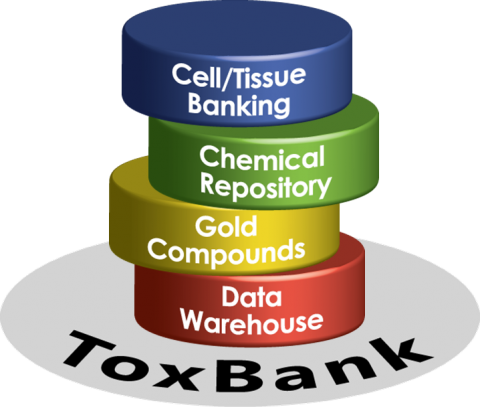
in three days experienced -23<sup>o</sup>C and +18<sup>o</sup>C. The reason
I was there was the kick-off meeting of the EU FP7 cluster SEURAT, which includes
‘our’ <a href="http://toxbank.net/">ToxBank</a> project.</p>

<p><img src="/blog/assets/images/ToxBankComponents.png" alt="" /></p>

<p>Data types we will host include many different types, including my favorite
metabolomics. Don’t ask me what this will practically mean, but some keywords
we already know include RDF, <a href="http://opentox.org/">OpenTox</a>, and <a href="http://www.leadscope.com/toxml.php">ToxML</a>.
With metabolomics, I hope to squeeze in metabolomics.</p>

<p>And that data warehousing for metabolomics is important was only recently shown
be the retraction (via <a href="http://retractionwatch.wordpress.com/">RetractionWatch</a>)
of <a href="http://www.nature.com/nature/journal/v434/n7030/full/nature03356.html">this Nature paper</a>
(doi:<a href="http://dx.doi.org/10.1038/nature03356">10.1038/nature03356</a>). The reason
was that it critically depended on conclusions from another <a href="http://pubs.acs.org/doi/abs/10.1021/jf902670b">retracted</a>
<a href="http://pubs.acs.org/doi/abs/10.1021/jf021166h">paper</a> (doi:<a href="http://dx.doi.org/10.1021/jf021166h">10.1021/jf021166h</a>),
from J. Agric. Food Chem. in 2009.</p>

<p>In this paper, they identified ten chemicals from arabidopsis: <a href="http://en.wikipedia.org/wiki/Butanoic_acid">butanoic acid</a>;
<a href="http://en.wikipedia.org/wiki/Trans-cinnamic_acid">trans-cinnamic acid</a>; o-<a href="http://en.wikipedia.org/wiki/Coumaric_acid">coumaric
acid</a>; p-coumaric acid; <a href="http://en.wikipedia.org/wiki/Ferulic_acid">ferulic
acid</a>; p-hydroxybenzamide; <a href="http://en.wikipedia.org/wiki/Methyl_p-hydroxybenzoate">methyl
p-hydroxybenzoate</a>; 3-indolepropanoic
acid; <a href="http://en.wikipedia.org/wiki/Syringic_acid">syringic acid</a>; and, <a href="http://en.wikipedia.org/wiki/Vanillic_acid">vanillic
acid</a>. I hope I have the links to
Wikipedia correct, as this was based on names only, as the paper does not seem
to list InChIs or even SMILESes. The ten chemical were identified with HPLC
and NMR. No experimental data seems to be given. What NMR data did they base
the identification on? I have seen pretty interesting assignments of chemical
identity in GC/MS and LC/MS, so was quite disappointed to not see the gory details
here.</p>

<p>But fortunately, I could look at the raw data. Yeah, sure! Dream on.</p>

<p>In fact, it seems the characterizations of the 10 chemicals was challenged,
causing the authors to look again at their data. Unfortunately, they could not
find experimental data anymore. The authors write in the <a href="http://pubs.acs.org/doi/full/10.1021/jf902670b">retraction</a>:</p>

<blockquote>
  <p>We have been unable to find experimental data that document the actual isolation of butanoic acid,
trans-cinnamic acid, …</p>
</blockquote>

<p>Now, readers of my blog I care about raw data (see <a href="http://chem-bla-ics.blogspot.com/2010/08/molecular-chemometrics-principles-1.html">McPrinciple #1</a>).
For example, it was a key feature of our <a href="http://chem-bla-ics.blogspot.com/search?q=MetWare">MetWare</a>
project. It is not entirely clear to me that they could no longer find the raw
data, or whether they were no longer able to correlate their extracted characteristics
with the know NMR for those ten compounds. This only strengthens the importance
of NMR databases in metabolite identification, something <a href="http://www.steinbeck-molecular.de/steinblog/">Christoph</a>
would only agree with.</p>

<p>I am not sure we will see the bottom of this, and see if the authors could have
prevented this retraction. However, I do believe the paper was flawed in the
first place: it did not give experimental detail allowing the referees to judge
the metabolite identification. The referees failed, as the apparently did not
find this aspect important enough to have this data in the paper. And, the journal
failed clearly, by not having a good editorial requirement in place around availability
of data. This is not specific to this retracted paper, nor of this journal.
It’s pretty much the community standard, despite many calling for years for
better standards, e.g. via minimal reporting standards.</p>

<p>Well, maybe journal editors will soon wake up, and make availability of experimental
data in papers of this kind (and any type, IMHO) a community standard, and strong
standard, such strong that referees can reject papers of papers do not provide
this minimal information.</p>

<p>Why? It would have saved a lot of people from doing the wrong thing. The original
paper was cited 54 times (according to WoS) and the Nature paper 52 times (up
one since the RetractionWatch post). We’re bound to see a few more retractions
as a result of this, I guess.</p>

<p>So, where I failed to get MetWare going within the <a href="http://www.metabolomicscentre.nl/">Netherlands Metabolomics
Center</a>, let’s hope ToxBank does better.
But given the list of ToxBank partners, I have no doubt about that.</p>]]></content><author><name>Egon Willighagen</name></author><category term="metabolomics" /><category term="metware" /><category term="nature" /><category term="nmr" /><category term="opendata" /><category term="publishing" /><category term="justdoi:10.1038/nature03356" /><category term="justdoi:10.1021/jf902670b" /><category term="justdoi:10.1021/jf021166h" /><summary type="html"><![CDATA[Last week I was in sunny Cascais, and in three days experienced -23oC and +18oC. The reason I was there was the kick-off meeting of the EU FP7 cluster SEURAT, which includes ‘our’ ToxBank project.]]></summary><media:thumbnail xmlns:media="http://search.yahoo.com/mrss/" url="http://egonw.github.io/blog/blog/assets/images/ToxBankComponents.png" /><media:content medium="image" url="http://egonw.github.io/blog/blog/assets/images/ToxBankComponents.png" xmlns:media="http://search.yahoo.com/mrss/" /></entry><entry><title type="html">MetWare presenation at Metabolomics Workshop</title><link href="http://egonw.github.io/blog/2009/01/27/metware-presenation-at-metabolomics.html" rel="alternate" type="text/html" title="MetWare presenation at Metabolomics Workshop" /><published>2009-01-27T00:00:00+00:00</published><updated>2009-01-27T00:00:00+00:00</updated><id>http://egonw.github.io/blog/2009/01/27/metware-presenation-at-metabolomics</id><content type="html" xml:base="http://egonw.github.io/blog/2009/01/27/metware-presenation-at-metabolomics.html"><![CDATA[<p>I gave <a href="https://doi.org/10.5281/zenodo.3366041">this</a> 10 minute presentation on
<a href="https://sourceforge.net/projects/metware/">MetWare <i class="fa-solid fa-recycle fa-xs"></i></a> this afternoon at the
<a href="http://www.elixir-europe.org/page.php?page=metabolomics_workshop">International Metabolomics Workshop <i class="fa-solid fa-link-slash fa-xs"></i></a>:</p>

<p><a href="https://doi.org/10.5281/zenodo.3366041"><img src="/blog/assets/images/metware_uppsala_2009.png" alt="" /></a></p>]]></content><author><name>Egon Willighagen</name></author><category term="metware" /><category term="metabolomics" /><category term="doi:10.5281/ZENODO.3366041" /><summary type="html"><![CDATA[I gave this 10 minute presentation on MetWare this afternoon at the International Metabolomics Workshop :]]></summary><media:thumbnail xmlns:media="http://search.yahoo.com/mrss/" url="http://egonw.github.io/blog/blog/assets/images/metware_uppsala_2009.png" /><media:content medium="image" url="http://egonw.github.io/blog/blog/assets/images/metware_uppsala_2009.png" xmlns:media="http://search.yahoo.com/mrss/" /></entry><entry><title type="html">MetWare screenshot: propagating XML Schema data types</title><link href="http://egonw.github.io/blog/2008/08/26/metware-screenshot-propagating-xml.html" rel="alternate" type="text/html" title="MetWare screenshot: propagating XML Schema data types" /><published>2008-08-26T00:00:00+00:00</published><updated>2008-08-26T00:00:00+00:00</updated><id>http://egonw.github.io/blog/2008/08/26/metware-screenshot-propagating-xml</id><content type="html" xml:base="http://egonw.github.io/blog/2008/08/26/metware-screenshot-propagating-xml.html"><![CDATA[<p>Just a quick screenshot. Remember our use of <a href="http://chem-bla-ics.blogspot.com/2008/05/metware-status-report.html">SKOS in MetWare</a>?
<a href="https://chem-bla-ics.blogspot.com/2008/08/metware-screenshot-propagating-xml.html">Steffen</a> has been working on creating integrated
<a href="http://en.wikipedia.org/wiki/JavaServer_Faces">JSF pages</a>, while I am focusing on autogeneration of blobs. The below screenshot is
such a blob, called a UI component in JSF, which allows easy embedding the the aggregations Steffen is working on.</p>

<p>Autogeneration of web content benefits greatly from well defined input, including data types.
<a href="http://www.metware.org/">MetWare</a> uses <a href="http://en.wikipedia.org/wiki/XML_Schema_(W3C)#Data_Types">XML Schema Data Types</a>
for this, as <a href="http://chem-bla-ics.blogspot.com/2008/08/metware-screenshot-spectrum-support-2.html">mentioned ealier</a> when I briefly
mentioned generation of search pages. That example showed the creation of range input on <code class="language-plaintext highlighter-rouge">xsd:integer</code> types. The below screenshot
shows the different output for <code class="language-plaintext highlighter-rouge">xsd:string</code> (input text box) and <code class="language-plaintext highlighter-rouge">xsd:boolean</code>:</p>

<p><img src="/blog/assets/images/boolDataType.png" alt="" /></p>

<p>Now, this example is not really shocking, but MetWare defines additional types, for example an InChI data type:</p>

<div class="language-xml highlighter-rouge"><div class="highlight"><pre class="highlight"><code><span class="nt">&lt;simpleType</span> <span class="na">name=</span><span class="s">"inchi"</span><span class="nt">&gt;</span>
  <span class="nt">&lt;restriction</span> <span class="na">base=</span><span class="s">"string"</span><span class="nt">&gt;</span>
    <span class="nt">&lt;pattern</span> <span class="na">value=</span><span class="s">"InChI=1/.*"</span><span class="nt">/&gt;</span>
  <span class="nt">&lt;/restriction&gt;</span>
<span class="nt">&lt;/simpleType&gt;</span>
</code></pre></div></div>

<p>This allows me to tweak the HTML output created by the JSF pages to include <a href="http://microformats.org/">microformats</a> to support
the <a href="http://chem-bla-ics.blogspot.com/2007/05/cb-comments-for-inchis.html">Sechemtic</a> userscript (see also
doi:<a href="https://doi.org/10.1186/1471-2105-8-487">10.1186/1471-2105-8-487</a>).</p>

<p>Or, to provide a drop down box, listing the allowed values:</p>

<div class="language-xml highlighter-rouge"><div class="highlight"><pre class="highlight"><code><span class="nt">&lt;simpleType</span> <span class="na">name=</span><span class="s">"deviceVendor"</span><span class="nt">&gt;</span>
  <span class="nt">&lt;restriction</span> <span class="na">base=</span><span class="s">"string"</span><span class="nt">&gt;</span>
    <span class="nt">&lt;enumeration</span> <span class="na">value=</span><span class="s">"BioCrates"</span><span class="nt">/&gt;</span>
    <span class="nt">&lt;enumeration</span> <span class="na">value=</span><span class="s">"Bruecker"</span><span class="nt">/&gt;</span>
  <span class="nt">&lt;/restriction&gt;</span>
<span class="nt">&lt;/simpleType&gt;</span>
</code></pre></div></div>]]></content><author><name>Egon Willighagen</name></author><category term="metware" /><category term="xml" /><category term="skos" /><category term="doi:10.1186/1471-2105-8-487" /><summary type="html"><![CDATA[Just a quick screenshot. Remember our use of SKOS in MetWare? Steffen has been working on creating integrated JSF pages, while I am focusing on autogeneration of blobs. The below screenshot is such a blob, called a UI component in JSF, which allows easy embedding the the aggregations Steffen is working on.]]></summary><media:thumbnail xmlns:media="http://search.yahoo.com/mrss/" url="http://egonw.github.io/blog/blog/assets/images/boolDataType.png" /><media:content medium="image" url="http://egonw.github.io/blog/blog/assets/images/boolDataType.png" xmlns:media="http://search.yahoo.com/mrss/" /></entry><entry><title type="html">MetWare screenshot: spectrum support #2</title><link href="http://egonw.github.io/blog/2008/08/21/metware-screenshot-spectrum-support-2.html" rel="alternate" type="text/html" title="MetWare screenshot: spectrum support #2" /><published>2008-08-21T00:00:00+00:00</published><updated>2008-08-21T00:00:00+00:00</updated><id>http://egonw.github.io/blog/2008/08/21/metware-screenshot-spectrum-support-2</id><content type="html" xml:base="http://egonw.github.io/blog/2008/08/21/metware-screenshot-spectrum-support-2.html"><![CDATA[<p>As <a href="http://chem-bla-ics.blogspot.com/2008/08/metware-screenshot-spectrum-support.html">promised yesterday</a>, here’s the pretty
visualization of the mass spectrum, using JavaScript from the <a href="http://www.ebi.ac.uk/pride/#soft">PRIDE project</a>:</p>

<p><img src="/blog/assets/images/msGUI.png" alt="" /></p>

<p>Note the manual adding of peaks at 10 and 100 m/z to get the real peaks somewhere in the middle instead of on the left and right border of the graph.</p>

<p>Meanwhile, the search page is now autogenerated too, and the types of searches allowed (min, max in the picture) again depends on the
XML Scheme data type defined in the <a href="http://metware.svn.sourceforge.net/viewvc/metware/BigMet/trunk/src/main/onto/metware.skos?content-type=text%2Fxml&amp;revision=HEAD">MetWare SKOS</a>:</p>

<p><img src="/blog/assets/images/mwSearch.png" alt="" /></p>]]></content><author><name>Egon Willighagen</name></author><category term="metware" /><category term="metabolomics" /><category term="xml" /><category term="skos" /><summary type="html"><![CDATA[As promised yesterday, here’s the pretty visualization of the mass spectrum, using JavaScript from the PRIDE project:]]></summary><media:thumbnail xmlns:media="http://search.yahoo.com/mrss/" url="http://egonw.github.io/blog/blog/assets/images/msGUI.png" /><media:content medium="image" url="http://egonw.github.io/blog/blog/assets/images/msGUI.png" xmlns:media="http://search.yahoo.com/mrss/" /></entry><entry><title type="html">MetWare screenshot: spectrum support</title><link href="http://egonw.github.io/blog/2008/08/20/metware-screenshot-spectrum-support.html" rel="alternate" type="text/html" title="MetWare screenshot: spectrum support" /><published>2008-08-20T00:00:00+00:00</published><updated>2008-08-20T00:00:00+00:00</updated><id>http://egonw.github.io/blog/2008/08/20/metware-screenshot-spectrum-support</id><content type="html" xml:base="http://egonw.github.io/blog/2008/08/20/metware-screenshot-spectrum-support.html"><![CDATA[<p>Not visually attractive, but that will be solved when Steffen gets his hands on it. For now, I’m happy with a table formatting.
Reason: it uses XML Schema to define a dataType, which is recognized by our code generators in <a href="http://www.metware.org/">MetWare</a>
(see also <a href="https://chem-bla-ics.blogspot.com/2008/05/metware-status-report.html">this presentation</a>), and used to create a easy to use Java API, which, in turn, can be used in this JSF snippet:</p>

<div class="language-xml highlighter-rouge"><div class="highlight"><pre class="highlight"><code><span class="nt">&lt;h:dataTable</span> <span class="na">value=</span><span class="s">"#{metobservCharacterizationMassspectrum.spectralPoints.points}"</span> <span class="na">var=</span><span class="s">"specpoint"</span><span class="nt">&gt;</span>
  <span class="nt">&lt;h:column&gt;</span>
    <span class="nt">&lt;f:facet</span> <span class="na">name=</span><span class="s">"header"</span><span class="nt">&gt;&lt;h:outputText</span> <span class="na">value=</span><span class="s">"m/z's"</span><span class="nt">/&gt;&lt;/f:facet&gt;</span>
    <span class="nt">&lt;h:outputText</span> <span class="na">value=</span><span class="s">"#{specpoint.mz}"</span><span class="nt">/&gt;</span>
  <span class="nt">&lt;/h:column&gt;</span>
  <span class="nt">&lt;h:column&gt;</span>
    <span class="nt">&lt;f:facet</span> <span class="na">name=</span><span class="s">"header"</span><span class="nt">&gt;&lt;h:outputText</span> <span class="na">value=</span><span class="s">"Intensities"</span><span class="nt">/&gt;&lt;/f:facet&gt;</span>
    <span class="nt">&lt;h:outputText</span> <span class="na">value=</span><span class="s">"#{specpoint.intensity}"</span><span class="nt">/&gt;</span>
  <span class="nt">&lt;/h:column&gt;</span>
<span class="nt">&lt;/h:dataTable&gt;</span>
</code></pre></div></div>

<p>The <code class="language-plaintext highlighter-rouge">&lt;dataTable&gt; @value</code> points (via the <code class="language-plaintext highlighter-rouge">faces-config.xml</code>) to the <code class="language-plaintext highlighter-rouge">MetobservCharacterizationMassspectrumBean</code>, which has a
<code class="language-plaintext highlighter-rouge">getSpectralPoints()</code> method (autocreated from the <code class="language-plaintext highlighter-rouge">&lt;skos:Concept&gt;</code> <code class="language-plaintext highlighter-rouge">SpectralPoints</code>, which has a convenience method
<code class="language-plaintext highlighter-rouge">List&lt;SpectralPoint&gt; getPoints()</code>.</p>

<p><code class="language-plaintext highlighter-rouge">SpectralPoint</code> in turn has the methods <code class="language-plaintext highlighter-rouge">getIntensity()</code> and <code class="language-plaintext highlighter-rouge">getMz()</code> also used in the above JSF snippet. For convenience,
<code class="language-plaintext highlighter-rouge">SpectralPointArray</code> also has two other methods: <code class="language-plaintext highlighter-rouge">double[] getIntensities()</code> and <code class="language-plaintext highlighter-rouge">double[] getMzs()</code> (which I’ll have to
rename to reuse the code for NMR support :).</p>

<p>So, here’s the outcome:</p>

<p><img src="/blog/assets/images/msTable.png" alt="" /></p>

<p>Final note, given the dataType, the MetWare bean also has the logic to convert the data back and forth into a SQL serialization,
which may eventually use base64 encoding, but currently looks like <em>61.0,100.0;62.0,1.1</em>, as defined by the regular expression of
the XSD dataType for spectralPointArray.</p>]]></content><author><name>Egon Willighagen</name></author><category term="metware" /><category term="xml" /><category term="java" /><summary type="html"><![CDATA[Not visually attractive, but that will be solved when Steffen gets his hands on it. For now, I’m happy with a table formatting. Reason: it uses XML Schema to define a dataType, which is recognized by our code generators in MetWare (see also this presentation), and used to create a easy to use Java API, which, in turn, can be used in this JSF snippet:]]></summary><media:thumbnail xmlns:media="http://search.yahoo.com/mrss/" url="http://egonw.github.io/blog/blog/assets/images/msTable.png" /><media:content medium="image" url="http://egonw.github.io/blog/blog/assets/images/msTable.png" xmlns:media="http://search.yahoo.com/mrss/" /></entry><entry><title type="html">Metware Status Report</title><link href="http://egonw.github.io/blog/2008/05/16/metware-status-report.html" rel="alternate" type="text/html" title="Metware Status Report" /><published>2008-05-16T00:00:00+00:00</published><updated>2008-05-16T00:00:00+00:00</updated><id>http://egonw.github.io/blog/2008/05/16/metware-status-report</id><content type="html" xml:base="http://egonw.github.io/blog/2008/05/16/metware-status-report.html"><![CDATA[<p>Following many, many others, I finally got myself a <a href="http://www.slideshare.net/">SlideShare</a>
<a href="https://web.archive.org/web/20091129144404/https://www.slideshare.net/egonw/">account <i class="fa-solid fa-box-archive fa-xs"></i></a>
and uploaded a <a href="https://web.archive.org/web/20091125183518/http://www.slideshare.net/egonw/metware">recent presentation <i class="fa-solid fa-box-archive fa-xs"></i></a>
on <a href="http://metware.sf.net/">MetWare</a>, our metabolomics data warehouse project. Some spoilers: SQL, RDF/SKOS, JSF.</p>

<p><a href="https://zenodo.org/records/2639469"><img src="/blog/assets/images/metware_presentation_2008.png" alt="" /></a></p>]]></content><author><name>Egon Willighagen</name></author><category term="metware" /><category term="rdf" /><category term="ontology" /><category term="java" /><category term="doi:10.5281/ZENODO.2639469" /><summary type="html"><![CDATA[Following many, many others, I finally got myself a SlideShare account and uploaded a recent presentation on MetWare, our metabolomics data warehouse project. Some spoilers: SQL, RDF/SKOS, JSF.]]></summary><media:thumbnail xmlns:media="http://search.yahoo.com/mrss/" url="http://egonw.github.io/blog/blog/assets/images/metware_presentation_2008.png" /><media:content medium="image" url="http://egonw.github.io/blog/blog/assets/images/metware_presentation_2008.png" xmlns:media="http://search.yahoo.com/mrss/" /></entry><entry><title type="html">The MetWare developers meeting in Halle</title><link href="http://egonw.github.io/blog/2008/04/09/metware-developers-meeting-in-halle.html" rel="alternate" type="text/html" title="The MetWare developers meeting in Halle" /><published>2008-04-09T00:00:00+00:00</published><updated>2008-04-09T00:00:00+00:00</updated><id>http://egonw.github.io/blog/2008/04/09/metware-developers-meeting-in-halle</id><content type="html" xml:base="http://egonw.github.io/blog/2008/04/09/metware-developers-meeting-in-halle.html"><![CDATA[<p>Today starts the <a href="http://metware.sf.net/">MetWare</a> developers meeting, hosted by <a href="http://www.ipb-halle.de/de/forschung/stress-und-entwicklungsbiologie/forschungsgruppen/bioinformatik-massenspektrometrie/">Steffen Neumann</a>,
at the <a href="http://www.ipb-halle.de/de/">Leibniz-Institut für Pflanzenbiochemie</a>. Steffen’s group and the <a href="http://www.ab.wur.nl/">Applied Bioinformatics</a>
group where I now work, are co-developing an opensource platform for metabolomics data management. Not really a full LIMS system,
but a system to keep track of all the facts about the experiments and samples we would use when analyzing the data in order to
find new chemistry, biomarkers, etc (see <a href="http://chem-bla-ics.blogspot.com/2007/11/metware-metabolomics-database-project.html">this earlier blog</a>
too). Good news is, that BioAssist is developing a support platform for the <a href="http://www.metabolomicscentre.nl/">NMC</a>,
and plans to use MetWare as a main component.</p>

<p>OK, off to catch my train now. See you online (#metware @ irc.freenode.net); the wiki has an
<a href="http://metware.wiki.sourceforge.net/AgendaApril08">agenda for the meeting</a>.</p>]]></content><author><name>Egon Willighagen</name></author><category term="metware" /><category term="metabolomics" /><summary type="html"><![CDATA[Today starts the MetWare developers meeting, hosted by Steffen Neumann, at the Leibniz-Institut für Pflanzenbiochemie. Steffen’s group and the Applied Bioinformatics group where I now work, are co-developing an opensource platform for metabolomics data management. Not really a full LIMS system, but a system to keep track of all the facts about the experiments and samples we would use when analyzing the data in order to find new chemistry, biomarkers, etc (see this earlier blog too). Good news is, that BioAssist is developing a support platform for the NMC, and plans to use MetWare as a main component.]]></summary></entry><entry><title type="html">Metabolomics Ontologies: SKOS-ified the ArMet specification</title><link href="http://egonw.github.io/blog/2008/03/03/metabolomics-ontologies-skos-ified.html" rel="alternate" type="text/html" title="Metabolomics Ontologies: SKOS-ified the ArMet specification" /><published>2008-03-03T00:00:00+00:00</published><updated>2008-03-03T00:00:00+00:00</updated><id>http://egonw.github.io/blog/2008/03/03/metabolomics-ontologies-skos-ified</id><content type="html" xml:base="http://egonw.github.io/blog/2008/03/03/metabolomics-ontologies-skos-ified.html"><![CDATA[<p>The <a href="http://chem-bla-ics.blogspot.com/2007/11/metware-metabolomics-database-project.html">MetWare project</a> is going to make use of ontology
technologies to control the content of the database, and a first step is to convert <a href="http://metware.svn.sourceforge.net/viewvc/metware/trunk/metware/design/">our MetWare database design</a>
into something using a formal ontology language. I have played with <a href="http://en.wikipedia.org/wiki/Web_Ontology_Language">OWL</a> in the past (see for example
<a href="http://chem-bla-ics.blogspot.com/2007/04/bioclipse-now-allows-qsar-descriptor.html">its use in Bioclipse</a>), but was not overly happy with
it in all situations.</p>

<p>Then I read about <a href="http://en.wikipedia.org/wiki/SKOS">SKOS</a>, Simplified Knowledge Organisation System. Unlike OWL, SKOS is less strict on relations
between concepts being marked up. Often these concepts are loosely bound, instead following a strict <em>is_a</em> hierarchy.
<a href="http://www.armet.org/">ArMet</a> is a Metabolomics knowledge system which does not have a strong hierarchy, and SKOS seemed to me to be the most
suitable markup candidate. So, I SKOS-ified the ArMet specification, resulting in <a href="http://metware.svn.sourceforge.net/viewvc/*checkout*/metware/trunk/metware/design/onto/armet.skos?revision=HEAD&amp;content-type=text%2Fxml">this rather simple document</a>.
The document is SKOS, but has an associated <a href="http://metware.svn.sourceforge.net/viewvc/*checkout*/metware/trunk/metware/design/onto/skos2html.xsl?revision=HEAD&amp;content-type=text%2Fxml">skos2html.xsl</a>
<a href="http://en.wikipedia.org/wiki/XSLT">XSLT stylesheet</a>, so that Firefox converts it to XHTML on the fly.</p>

<p>An entry looks like:</p>

<div class="language-xml highlighter-rouge"><div class="highlight"><pre class="highlight"><code><span class="nt">&lt;skos:Concept</span> <span class="na">rdf:about=</span><span class="s">"GenotypeID"</span><span class="nt">&gt;</span>
  <span class="nt">&lt;skos:prefLabel&gt;</span>genotypeID<span class="nt">&lt;/skos:prefLabel&gt;</span>

  <span class="nt">&lt;skos:definition&gt;</span>A unique identifier for the genotype.<span class="nt">&lt;/skos:definition&gt;</span>
  <span class="nt">&lt;skos:broader</span> <span class="na">rdf:about=</span><span class="s">"GenotypeProperty"</span><span class="nt">/&gt;</span>
<span class="nt">&lt;/skos:Concept&gt;</span>
</code></pre></div></div>

<p>The full SKOS specification allows capturing much of what we want to do, including i18n via the label system, loos hierarchical relations via
<em>skos:broader</em>, and the concepts of <em>skos:Collection</em> to aggregate concepts. Where needed, it allows borrowing from other languages. For example,
to link concepts from MetWare to the original ArMet specification <em>owl:sameAs</em> can be used.</p>]]></content><author><name>Egon Willighagen</name></author><category term="bioclipse" /><category term="metware" /><category term="ontology" /><category term="semweb" /><summary type="html"><![CDATA[The MetWare project is going to make use of ontology technologies to control the content of the database, and a first step is to convert our MetWare database design into something using a formal ontology language. I have played with OWL in the past (see for example its use in Bioclipse), but was not overly happy with it in all situations.]]></summary></entry><entry><title type="html">Java Server Pages with CDK functionality</title><link href="http://egonw.github.io/blog/2008/01/20/java-server-pages-with-cdk.html" rel="alternate" type="text/html" title="Java Server Pages with CDK functionality" /><published>2008-01-20T00:00:00+00:00</published><updated>2008-01-20T00:00:00+00:00</updated><id>http://egonw.github.io/blog/2008/01/20/java-server-pages-with-cdk</id><content type="html" xml:base="http://egonw.github.io/blog/2008/01/20/java-server-pages-with-cdk.html"><![CDATA[<p>Setting up interactive web pages can be done in many way. <a href="http://en.wikipedia.org/wiki/JavaServer_Pages">Java Server Pages</a> are just one of them.
They are quite similar to PHP pages or <a href="http://depth-first.com/articles/2006/11/21/build-a-rails-cheminformatics-application-in-thirty-minutes">Ruby</a>,
and combine plain HTML (and likely any other output) code with fragments of code; Java source code in this case.</p>

<p><a href="http://www.ubuntu.com/">Ubuntu</a>’s <a href="http://packages.ubuntu.com/gutsy/web/tomcat5.5">tomcat5.5</a> package installs quite easily, and sets up a server
at port 8180. I still have to figure out how to nicely integrate it with the Apache server on port 80, though. Suggestions much appreciated.</p>

<p>From then on, one can add new JSP pages by creating a ‘webapp’ in <code class="language-plaintext highlighter-rouge">/usr/share/tomcat5.5-webapps</code>. The basic structure looks like:</p>

<div class="language-shell highlighter-rouge"><div class="highlight"><pre class="highlight"><code>mb-examples.xml
mb-examples/index.jsp
mb-examples/WEB-INF/
mb-examples/WEB-INF/classes/
mb-examples/WEB-INF/lib/
</code></pre></div></div>

<p>Just copying the <a href="http://cheminfo.informatics.indiana.edu/~rguha/code/java/nightly/">large CDK jar</a> (the one with all the third party libraries)
into <code class="language-plaintext highlighter-rouge">WEB-INF/lib/</code> did not work for me, but unjaring it into <code class="language-plaintext highlighter-rouge">WEB-INF/classes/</code> seem to work fine.</p>

<p>Then, you can just add Java code using the CDK library for what ever you like. The following (simple) example JSP page, takes one parameter,
a molecular formula. This could be the input given in a FORM, but the below page does not deal with that situation yet:</p>

<div class="language-xml highlighter-rouge"><div class="highlight"><pre class="highlight"><code><span class="err">&lt;</span>%@ page import="java.util.*,org.openscience.cdk.*,org.openscience.cdk.tools.*" %&gt;
<span class="cp">&lt;!doctype html public "-//w3c//dtd html 4.0 transitional//en"&gt;</span>
<span class="nt">&lt;html&gt;</span>
<span class="err">&lt;</span>%
   String mf = request.getParameter( "mf" );
%&gt;
<span class="nt">&lt;head&gt;</span>
   <span class="nt">&lt;meta</span> <span class="na">http-equiv=</span><span class="s">"Content-Type"</span> <span class="na">content=</span><span class="s">"text/html; charset=iso-8859-1"</span><span class="nt">&gt;</span>
   <span class="nt">&lt;meta</span> <span class="na">name=</span><span class="s">"Author"</span> <span class="na">content=</span><span class="s">"E.L. Willighagen"</span><span class="nt">&gt;</span>
   <span class="nt">&lt;title&gt;</span>Metabolomics Examples<span class="nt">&lt;/title&gt;</span>
<span class="nt">&lt;/head&gt;</span>

<span class="nt">&lt;body</span> <span class="na">bgcolor=</span><span class="s">"#FFFFFF"</span><span class="nt">&gt;</span>

<span class="nt">&lt;table&gt;</span>
<span class="nt">&lt;tr&gt;</span>
<span class="nt">&lt;td&gt;</span>Molecular Formula:<span class="nt">&lt;/td&gt;</span>
<span class="nt">&lt;td&gt;</span><span class="err">&lt;</span>%= mf %&gt;<span class="nt">&lt;/td&gt;</span>
<span class="nt">&lt;/tr&gt;</span>

<span class="err">&lt;</span>%
MFAnalyser analyser = new MFAnalyser(mf, new Molecule());
double accurateMass = Math.round(analyser.getMass()*10000.0)/10000.0;
%&gt;

<span class="nt">&lt;tr&gt;</span>
<span class="nt">&lt;td&gt;</span>Mono-isotopic Accurate Mass:<span class="nt">&lt;/td&gt;</span>
<span class="nt">&lt;td&gt;</span><span class="err">&lt;</span>%= accurateMass %&gt;<span class="nt">&lt;/td&gt;</span>
<span class="nt">&lt;/tr&gt;</span>
<span class="nt">&lt;/table&gt;</span>

<span class="nt">&lt;/body&gt;</span>
<span class="nt">&lt;/html&gt;</span>
</code></pre></div></div>

<p>Now, a lot of improvement can be achieved. For example, the <code class="language-plaintext highlighter-rouge">&lt;head&gt;</code> stuff can be split out in a <code class="language-plaintext highlighter-rouge">header.include</code>. And, after proper integration with the
Apache server, <a href="http://httpd.apache.org/docs/2.0/misc/rewriteguide.html">rewrites</a> could be used to create a REST service. But, the above is just to give you an idea.</p>

<p>In case you wonder, this work is related to the opensource <a href="http://chem-bla-ics.blogspot.com/2007/11/metware-metabolomics-database-project.html">MetWare</a>
database software development our group is involved in.</p>]]></content><author><name>Egon Willighagen</name></author><category term="java" /><category term="cdk" /><category term="metware" /><summary type="html"><![CDATA[Setting up interactive web pages can be done in many way. Java Server Pages are just one of them. They are quite similar to PHP pages or Ruby, and combine plain HTML (and likely any other output) code with fragments of code; Java source code in this case.]]></summary></entry><entry><title type="html">MetWare: metabolomics database project started on SourceForge</title><link href="http://egonw.github.io/blog/2007/11/22/metware-metabolomics-database-project.html" rel="alternate" type="text/html" title="MetWare: metabolomics database project started on SourceForge" /><published>2007-11-22T00:00:00+00:00</published><updated>2007-11-22T00:00:00+00:00</updated><id>http://egonw.github.io/blog/2007/11/22/metware-metabolomics-database-project</id><content type="html" xml:base="http://egonw.github.io/blog/2007/11/22/metware-metabolomics-database-project.html"><![CDATA[<p>The Applied Bioinformatics at <a href="http://www.pri.wur.nl/NL/">PRI</a> group where I now work in <a href="http://en.wikipedia.org/wiki/Wageningen">Wageningen</a>
and the group of <a href="http://www.ipb-halle.de/de/forschung/stress-und-entwicklungsbiologie/forschungsgruppen/bioinformatik-massenspektrometrie/">Steffen Neumann</a>
in Halle have started the <a href="http://metware.sf.net/">MetWare</a> project on <a href="http://sf.net/">Sourceforge</a> to develop
opensource databases for metabolomics data.</p>

<p>The databases design will be based on and ideally compatible with proposed standards like ArMet (DOI:<a href="https://doi.org/10.1038/nbt1041">10.1038/nbt1041</a>)
and those recently written up by the <a href="http://msi-workgroups.sourceforge.net/">Metabolomics Standards Initiative</a>
(see the issue around DOI:<a href="https://doi.org/10.1007/s11306-007-0070-6">10.1007/s11306-007-0070-6</a>).</p>

<p>One important design goal is that the project will use <a href="http://www.biomart.org/">BioMart</a>, which will allow easy
integration of the database content in data analysis programs like <a href="http://taverna.sf.net/">Taverna</a>
and <a href="http://www.r-project.org/">R</a> using the <a href="http://www.bioconductor.org/packages/2.1/bioc/html/biomaRt.html">biomaRt</a>
package (see DOI:<a href="http://dx.doi.org/10.1093/bioinformatics/bti525">10.1093/bioinformatics/bti525</a>).</p>

<p>Though the software will be opensource, it is yet unsure how much data will be open.</p>]]></content><author><name>Egon Willighagen</name></author><category term="metabolomics" /><category term="metware" /><category term="justdoi:10.1038/nbt1041" /><category term="justdoi:10.1007/s11306-007-0070-6" /><category term="justdoi:10.1093/bioinformatics/bti525" /><summary type="html"><![CDATA[The Applied Bioinformatics at PRI group where I now work in Wageningen and the group of Steffen Neumann in Halle have started the MetWare project on Sourceforge to develop opensource databases for metabolomics data.]]></summary></entry></feed>