<?xml version="1.0" encoding="utf-8"?><feed xmlns="http://www.w3.org/2005/Atom" ><generator uri="https://jekyllrb.com/" version="4.3.4">Jekyll</generator><link href="http://egonw.github.io/blog/feed/by_tag/nature.xml" rel="self" type="application/atom+xml" /><link href="http://egonw.github.io/blog/" rel="alternate" type="text/html" /><updated>2026-11-19T06:09:00+00:00</updated><id>http://egonw.github.io/blog/feed/by_tag/nature.xml</id><title type="html">chem-bla-ics</title><subtitle>Chemblaics (pronounced chem-bla-ics) is the science that uses open science and computers to solve problems in chemistry, biochemistry and related fields.</subtitle><author><name>Egon Willighagen</name></author><entry><title type="html">ToxBank: a data warehouse for (computational) toxicology</title><link href="http://egonw.github.io/blog/2011/03/08/toxbank-data-warehouse-for.html" rel="alternate" type="text/html" title="ToxBank: a data warehouse for (computational) toxicology" /><published>2011-03-08T00:00:00+00:00</published><updated>2011-03-08T00:00:00+00:00</updated><id>http://egonw.github.io/blog/2011/03/08/toxbank-data-warehouse-for</id><content type="html" xml:base="http://egonw.github.io/blog/2011/03/08/toxbank-data-warehouse-for.html"><![CDATA[<p>Last week I was in sunny <a href="http://en.wikipedia.org/wiki/Cascais">Cascais</a>, and
in three days experienced -23<sup>o</sup>C and +18<sup>o</sup>C. The reason
I was there was the kick-off meeting of the EU FP7 cluster SEURAT, which includes
‘our’ <a href="http://toxbank.net/">ToxBank</a> project.</p>

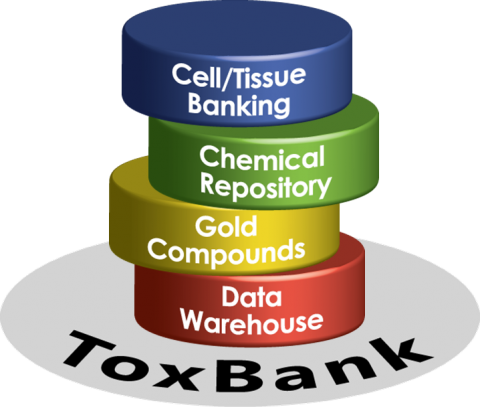
<p><img src="/blog/assets/images/ToxBankComponents.png" alt="" /></p>

<p>Data types we will host include many different types, including my favorite
metabolomics. Don’t ask me what this will practically mean, but some keywords
we already know include RDF, <a href="http://opentox.org/">OpenTox</a>, and <a href="http://www.leadscope.com/toxml.php">ToxML</a>.
With metabolomics, I hope to squeeze in metabolomics.</p>

<p>And that data warehousing for metabolomics is important was only recently shown
be the retraction (via <a href="http://retractionwatch.wordpress.com/">RetractionWatch</a>)
of <a href="http://www.nature.com/nature/journal/v434/n7030/full/nature03356.html">this Nature paper</a>
(doi:<a href="http://dx.doi.org/10.1038/nature03356">10.1038/nature03356</a>). The reason
was that it critically depended on conclusions from another <a href="http://pubs.acs.org/doi/abs/10.1021/jf902670b">retracted</a>
<a href="http://pubs.acs.org/doi/abs/10.1021/jf021166h">paper</a> (doi:<a href="http://dx.doi.org/10.1021/jf021166h">10.1021/jf021166h</a>),
from J. Agric. Food Chem. in 2009.</p>

<p>In this paper, they identified ten chemicals from arabidopsis: <a href="http://en.wikipedia.org/wiki/Butanoic_acid">butanoic acid</a>;
<a href="http://en.wikipedia.org/wiki/Trans-cinnamic_acid">trans-cinnamic acid</a>; o-<a href="http://en.wikipedia.org/wiki/Coumaric_acid">coumaric
acid</a>; p-coumaric acid; <a href="http://en.wikipedia.org/wiki/Ferulic_acid">ferulic
acid</a>; p-hydroxybenzamide; <a href="http://en.wikipedia.org/wiki/Methyl_p-hydroxybenzoate">methyl
p-hydroxybenzoate</a>; 3-indolepropanoic
acid; <a href="http://en.wikipedia.org/wiki/Syringic_acid">syringic acid</a>; and, <a href="http://en.wikipedia.org/wiki/Vanillic_acid">vanillic
acid</a>. I hope I have the links to
Wikipedia correct, as this was based on names only, as the paper does not seem
to list InChIs or even SMILESes. The ten chemical were identified with HPLC
and NMR. No experimental data seems to be given. What NMR data did they base
the identification on? I have seen pretty interesting assignments of chemical
identity in GC/MS and LC/MS, so was quite disappointed to not see the gory details
here.</p>

<p>But fortunately, I could look at the raw data. Yeah, sure! Dream on.</p>

<p>In fact, it seems the characterizations of the 10 chemicals was challenged,
causing the authors to look again at their data. Unfortunately, they could not
find experimental data anymore. The authors write in the <a href="http://pubs.acs.org/doi/full/10.1021/jf902670b">retraction</a>:</p>

<blockquote>
  <p>We have been unable to find experimental data that document the actual isolation of butanoic acid,
trans-cinnamic acid, …</p>
</blockquote>

<p>Now, readers of my blog I care about raw data (see <a href="http://chem-bla-ics.blogspot.com/2010/08/molecular-chemometrics-principles-1.html">McPrinciple #1</a>).
For example, it was a key feature of our <a href="http://chem-bla-ics.blogspot.com/search?q=MetWare">MetWare</a>
project. It is not entirely clear to me that they could no longer find the raw
data, or whether they were no longer able to correlate their extracted characteristics
with the know NMR for those ten compounds. This only strengthens the importance
of NMR databases in metabolite identification, something <a href="http://www.steinbeck-molecular.de/steinblog/">Christoph</a>
would only agree with.</p>

<p>I am not sure we will see the bottom of this, and see if the authors could have
prevented this retraction. However, I do believe the paper was flawed in the
first place: it did not give experimental detail allowing the referees to judge
the metabolite identification. The referees failed, as the apparently did not
find this aspect important enough to have this data in the paper. And, the journal
failed clearly, by not having a good editorial requirement in place around availability
of data. This is not specific to this retracted paper, nor of this journal.
It’s pretty much the community standard, despite many calling for years for
better standards, e.g. via minimal reporting standards.</p>

<p>Well, maybe journal editors will soon wake up, and make availability of experimental
data in papers of this kind (and any type, IMHO) a community standard, and strong
standard, such strong that referees can reject papers of papers do not provide
this minimal information.</p>

<p>Why? It would have saved a lot of people from doing the wrong thing. The original
paper was cited 54 times (according to WoS) and the Nature paper 52 times (up
one since the RetractionWatch post). We’re bound to see a few more retractions
as a result of this, I guess.</p>

<p>So, where I failed to get MetWare going within the <a href="http://www.metabolomicscentre.nl/">Netherlands Metabolomics
Center</a>, let’s hope ToxBank does better.
But given the list of ToxBank partners, I have no doubt about that.</p>]]></content><author><name>Egon Willighagen</name></author><category term="metabolomics" /><category term="metware" /><category term="nature" /><category term="nmr" /><category term="opendata" /><category term="publishing" /><category term="justdoi:10.1038/nature03356" /><category term="justdoi:10.1021/jf902670b" /><category term="justdoi:10.1021/jf021166h" /><summary type="html"><![CDATA[Last week I was in sunny Cascais, and in three days experienced -23oC and +18oC. The reason I was there was the kick-off meeting of the EU FP7 cluster SEURAT, which includes ‘our’ ToxBank project.]]></summary><media:thumbnail xmlns:media="http://search.yahoo.com/mrss/" url="http://egonw.github.io/blog/blog/assets/images/ToxBankComponents.png" /><media:content medium="image" url="http://egonw.github.io/blog/blog/assets/images/ToxBankComponents.png" xmlns:media="http://search.yahoo.com/mrss/" /></entry><entry><title type="html">Is Nature really clueless about Blogs, Twitter, etc? WTF ?!</title><link href="http://egonw.github.io/blog/2011/01/20/is-nature-really-clueless-about-blogs.html" rel="alternate" type="text/html" title="Is Nature really clueless about Blogs, Twitter, etc? WTF ?!" /><published>2011-01-20T00:00:00+00:00</published><updated>2011-01-20T00:00:00+00:00</updated><id>http://egonw.github.io/blog/2011/01/20/is-nature-really-clueless-about-blogs</id><content type="html" xml:base="http://egonw.github.io/blog/2011/01/20/is-nature-really-clueless-about-blogs.html"><![CDATA[<p>My apologies for this rant in the early morning, but WTF?? (what the fuzz??)
I just got pointed to this <em>Peer review: Trial by Twitter</em> (doi:<a href="http://dx.doi.org/10.1038/469286a">10.1038/469286a</a>)
by Mandavilli. Cool title, but before I even finished seventeen words of the
intro… WTF?? Here it is:</p>

<blockquote>
  <p>Blogs and tweets are ripping papers apart within days of publication, leaving researchers unsure how to react.</p>
</blockquote>

<p>What?? Is she mocking me? I know (I have been a reported of a university news
paper) that intros must encourage the reader to read on… but What?? (And I
read the intro a third time…)</p>

<p>I’ll have to read the full thing later, if that makes more sense. But is she
clueless? Are all people clueless about blogging, tweeting, etc?? Remember <a href="http://chem-bla-ics.blogspot.com/2010/10/royce-murray-and-caveat-emptor.html">Royce
Murray</a>?
Has she actually read the <em>Trial by Twitter</em> only so recently?</p>

<p>Dear Mandavilli, in case you do run into this blog post, here’s my reply to
your intro: “The researchers have no problems how to react, they just did.”</p>

<p>Now, after I cooled down a bit, and anticipating I got it all wrong, she might
refer to <em>the</em> researchers of the publication being ripped apart. In that case,
I am tempted to believe that also in the English language one is expected to
use (well, forgive me I do not know the exact term) “leaving the researchers
…”, where ‘the’ links ‘researchers’ to something said earlier. Now, I read,
probably wrong, researchers as any researcher interested in that publication.
Mandavilli could even have written “leaving the authors…”. But what do we
have Nature editors for, right?</p>

<p>Anyways, I do believe this will be an interesting read once I managed to read
past (for the fourth time) the intro of this article.</p>

<p>&lt;/ripping&gt;</p>]]></content><author><name>Egon Willighagen</name></author><category term="blogging" /><category term="nature" /><category term="publishing" /><category term="science" /><category term="twitter" /><category term="justdoi:10.1038/469286a" /><summary type="html"><![CDATA[My apologies for this rant in the early morning, but WTF?? (what the fuzz??) I just got pointed to this Peer review: Trial by Twitter (doi:10.1038/469286a) by Mandavilli. Cool title, but before I even finished seventeen words of the intro… WTF?? Here it is:]]></summary></entry><entry><title type="html">Nature should host our Electronic Lab Notebooks</title><link href="http://egonw.github.io/blog/2007/06/25/nature-should-host-our-electronic-lab.html" rel="alternate" type="text/html" title="Nature should host our Electronic Lab Notebooks" /><published>2007-06-25T00:00:00+00:00</published><updated>2007-06-25T00:00:00+00:00</updated><id>http://egonw.github.io/blog/2007/06/25/nature-should-host-our-electronic-lab</id><content type="html" xml:base="http://egonw.github.io/blog/2007/06/25/nature-should-host-our-electronic-lab.html"><![CDATA[<p><a href="http://pbeltrao.blogspot.com/">Pedro</a> suggested in <a href="http://network.nature.com/">Nature Network</a>s <a href="http://network.nature.com/forum/whats-next">What’s Next</a>
forum that Nature should add a new service for scientists: hosting electronic lab notebooks. And I think this will be a killer application.
I am rather excited about the idea, and feel ashamed not putting one-and-one together myself. We have our
<a href="http://www.blueobelisk.org/">chemoinformatics tools</a> and <a href="http://en.wikipedia.org/wiki/Resource_Description_Framework">RDF</a>
is just around the corner, that combined with <a href="http://hdl.handle.net/10042/23">semantic wikis</a>, and we have <em>science of the 21st century</em>.
This is <a href="http://network.nature.com/forums/whats-next/5?page=6#reply-508">my reply</a> posted on Nature Network:</p>

<ul><i>
<p>Pedro, that might be an interesting idea: Nature hosting ELN. with much content, I have been maintaining a wiki in my previous postdoc,
as replacement for the old paper notebook. Allows me to make links etc. I plan to do this in my new postdoc too, maybe even with a
RDF-enabled wiki, to have agents automatically verify what I enter for inconsistencies. These things are already possible; just a
matter of doing it.

<p>If Nature would host such a service (RDF-enabled, and integrated with their other pages), they have a true killer for me: I write
my ELN items, and for each page I decide if I want to make it public; since it is a wiki, I can keep it private until happy about
the results, or, simply, until the experiment has finished. Then, by clicking a button it would become CC+attribution and
automatically end up in Nature Preceedings. The full integration of Scintilla/Postgenomic/Connotea comes in when making links to
background material.

<p>The RDF is important for validating what I write, and I can imagine that Nature has an extensive set of default agents (of course,
in addition to spell checking etc :). These agents check if the chemical reaction equations makes sense (conservation of mass,
atom count, etc), that NMR/MS spectra and other experimental properties are consistent with that equation, and whatever else
we can come up with. The tools for this validation are available, and basically only the glue is missing.
&lt;/i&gt;&lt;/ul&gt;
</p></p></p></i></ul>]]></content><author><name>Egon Willighagen</name></author><category term="nature" /><category term="eln" /><category term="openscience" /><summary type="html"><![CDATA[Pedro suggested in Nature Networks What’s Next forum that Nature should add a new service for scientists: hosting electronic lab notebooks. And I think this will be a killer application. I am rather excited about the idea, and feel ashamed not putting one-and-one together myself. We have our chemoinformatics tools and RDF is just around the corner, that combined with semantic wikis, and we have science of the 21st century. This is my reply posted on Nature Network:]]></summary></entry><entry><title type="html">Preprint servers: the CPS failed, how will Nature Precedings do?</title><link href="http://egonw.github.io/blog/2007/06/09/preprint-servers-cps-failed-how-will.html" rel="alternate" type="text/html" title="Preprint servers: the CPS failed, how will Nature Precedings do?" /><published>2007-06-09T00:00:00+00:00</published><updated>2007-06-09T00:00:00+00:00</updated><id>http://egonw.github.io/blog/2007/06/09/preprint-servers-cps-failed-how-will</id><content type="html" xml:base="http://egonw.github.io/blog/2007/06/09/preprint-servers-cps-failed-how-will.html"><![CDATA[<p>Some 7 years ago, following successes in physics, <a href="http://chemweb.com/">ChemWeb.com</a>
<a href="http://www.prnewswire.co.uk/cgi/news/release?id=10870">launched the Chemistry Preprint Server (CPS)</a>,
and <a href="https://doi.org/10.1021/ci025627a">Warr evaluated</a> it in a JCIM article three years later.
She wrote about ‘lessons learned’, but the only one seemed to have been that chemistry was not
ready for it, as <a href="http://www.iucr.org/iucr-top/lists/epc-l/msg00790.html">the project shutdown in 2004</a>.
The <a href="http://www.sciencedirect.com/preprintarchive?url=/CPS">archives are still available</a>,
fortunately, and you may find it amusing to look up my or some other submission.</p>

<p>Now, <a href="http://blogs.nature.com/wp/nascent/2007/06/coming_soon_nature_precedings.html">Nascent wrote that Nature is setting up</a>
<a href="http://precedings.nature.com/">Nature Precedings</a>, which was earlier
<a href="http://pbeltrao.blogspot.com/2007/06/nature-preceedings-pre-print-server-for.html">noted by Pedro</a>.
The <a href="https://doi.org/10.1038/447614a">official announcement</a> was published as an editorial in
Nature. This being a Nature initiative, and not focused on just chemistry, I am sure it will do
better than CPS. BTW, media coverage is <a href="http://www.connotea.org/user/timo/tag/Precedings">tracked in a social way</a>.</p>

<p>I might <a href="http://network.nature.com/groups/bioinformatics/notice/2007/06/08/nature-precedings-contributors-wanted">request an test account</a>;
I do have an old half-finished manuscript that I never got around to finishing. While still relevant,
it could use some community input; this preprint server would be the perfect tool. That’s how my first
manuscript ended up on CPS too :)</p>]]></content><author><name>Egon Willighagen</name></author><category term="publishing" /><category term="justdoi:10.1021/ci025627a" /><category term="justdoi:10.1038/447614a" /><category term="nature" /><category term="connotea" /><summary type="html"><![CDATA[Some 7 years ago, following successes in physics, ChemWeb.com launched the Chemistry Preprint Server (CPS), and Warr evaluated it in a JCIM article three years later. She wrote about ‘lessons learned’, but the only one seemed to have been that chemistry was not ready for it, as the project shutdown in 2004. The archives are still available, fortunately, and you may find it amusing to look up my or some other submission.]]></summary></entry><entry><title type="html">Nature Network v2: cannot create a new group</title><link href="http://egonw.github.io/blog/2007/02/23/nature-network-v2-cannot-create-new.html" rel="alternate" type="text/html" title="Nature Network v2: cannot create a new group" /><published>2007-02-23T00:00:00+00:00</published><updated>2007-02-23T00:00:00+00:00</updated><id>http://egonw.github.io/blog/2007/02/23/nature-network-v2-cannot-create-new</id><content type="html" xml:base="http://egonw.github.io/blog/2007/02/23/nature-network-v2-cannot-create-new.html"><![CDATA[<p><a href="http://blogs.nature.com/wp/nascent/2007/02/nature_network_v2_is_live.html">Nascent</a> reported that
<a href="http://network.nature.com/">Nature Network v2</a> has gone life. Never too anxious to try something new,
I created an account and signed in. I even joined two groups: <em>Bioinformatics</em> and <em>Semantic Web for the Life Sciences</em>.</p>

<p>But, when I tried to create a new group, the system fails. I promised me to send me email for confirmation.
Tried it twice via my <a href="http://www.sf.net/">Sourceforge</a> email account. No email. I then changed my email
for my Nature account to my Gmail address. Still no email…</p>

<p>I am not located in Boston or London, is that the problem? Is being ‘global’ not good enough? Is the requirement
to have two ‘o’s in the name? Cologne then, maybe?</p>

<h2 id="missing-features">(Missing) Features</h2>

<p>For the rest, the system seems interesting. I am not too fond of having to create accounts all over the place
(<em>what was the password again???</em>), but looks promising. The thing I missed most when filling out my profile
was a feature to import the list of my publications from <a href="http://www.connotea.org/">Connotea</a>.</p>

<p>Another thing I missed, was the ability to mention my blog(s) in my profile. May I put this in as request too?
BTW, is there a group or forum on Nature Network where I can file these things?</p>]]></content><author><name>Egon Willighagen</name></author><category term="nature" /><category term="connotea" /><summary type="html"><![CDATA[Nascent reported that Nature Network v2 has gone life. Never too anxious to try something new, I created an account and signed in. I even joined two groups: Bioinformatics and Semantic Web for the Life Sciences.]]></summary></entry><entry><title type="html">Organic chemists can now tune properties without changing the molecular structure??</title><link href="http://egonw.github.io/blog/2006/11/12/organic-chemists-can-now-tune.html" rel="alternate" type="text/html" title="Organic chemists can now tune properties without changing the molecular structure??" /><published>2006-11-12T00:00:00+00:00</published><updated>2006-11-12T00:00:00+00:00</updated><id>http://egonw.github.io/blog/2006/11/12/organic-chemists-can-now-tune</id><content type="html" xml:base="http://egonw.github.io/blog/2006/11/12/organic-chemists-can-now-tune.html"><![CDATA[<p><a href="http://www.paulbracher.com/blog/?p=217">Paul Bracher</a> and <a href="http://blogs.nature.com/thescepticalchymist/2006/08/the_big_picture.html">Joshua Finkelstein</a>
pointed my attention to a nice discussion in <a href="http://www.nature.com/">Nature</a> on the future of chemistry, in
<a href="http://www.nature.com/nature/journal/v442/n7102/full/442500a.html">What Chemists Want to Know</a>, by Philip Ball.
Paul and Joshua already reviewed it thoroughly, but I could not resist commenting in it too. Having chosen chemistry
as specialization when I went to <a href="http://www.ru.nl/">university</a>, and with a minor in supramolecular chemistry,
this is a something I do relate to.</p>

<p>A main theme is whether chemistry is unexplored enough to justify further academic research and education. Ball’s answer is
yes, and came up with a six questions, of which I found this one most intriguing: <em>what is the chemical basis of thought and memory</em>.
But the article interestingly also discusses if chemistry has not become a tool for more interesting fields of research.
The Nobel prize winners Ball interviewed do not think so.</p>

<p>One quote took my surprise: <em>Where is synthetic astronomy - changing the gravitational constant to see what effect that
has on the properties of the Universe, and thus perhaps improving it?</em> Well, I might be out of the synthetic organic
chemistry for too long now, but this is not a quote I would like to be in Nature with; is synthetic chemistry now
able, then, to modify the nature, strengths of bonds now?? can they actually change molecular properties without
changing the connectivity?? Moreover, astronomers have changed the properties of objects in our universe: since
years they have been reducing the mass of the earth by sending of probes to other objects (satellites etc).
Likewise, chemistry is <strong>not</strong> changing nature, it is just exploring all compounds we never had purified in our
glassware yet. Synthesis is nowhere like changing nature.</p>

<p>There is one other comment I would like to post here. I strongly agree that chemistry in itself is important to have
as separate educational and research topic at universities. Simply because too databases are, from a chemical point
of view, messed up. For example, <a href="http://www.genome.jp/kegg/">KEGG</a> and the <a href="http://www.pdb.org/">PDB</a> are know to
have many chemical errors, though these databases are rather important indeed. We need people around to educate
people and point out those errors, if life sciences itself is to have a future.</p>]]></content><author><name>Egon Willighagen</name></author><category term="chemistry" /><category term="nature" /><category term="justdoi:10.1038/442500a" /><summary type="html"><![CDATA[Paul Bracher and Joshua Finkelstein pointed my attention to a nice discussion in Nature on the future of chemistry, in What Chemists Want to Know, by Philip Ball. Paul and Joshua already reviewed it thoroughly, but I could not resist commenting in it too. Having chosen chemistry as specialization when I went to university, and with a minor in supramolecular chemistry, this is a something I do relate to.]]></summary></entry></feed>