<?xml version="1.0" encoding="utf-8"?><feed xmlns="http://www.w3.org/2005/Atom" ><generator uri="https://jekyllrb.com/" version="4.3.4">Jekyll</generator><link href="http://egonw.github.io/blog/feed/by_tag/wikipedia.xml" rel="self" type="application/atom+xml" /><link href="http://egonw.github.io/blog/" rel="alternate" type="text/html" /><updated>2026-11-19T06:09:00+00:00</updated><id>http://egonw.github.io/blog/feed/by_tag/wikipedia.xml</id><title type="html">chem-bla-ics</title><subtitle>Chemblaics (pronounced chem-bla-ics) is the science that uses open science and computers to solve problems in chemistry, biochemistry and related fields.</subtitle><author><name>Egon Willighagen</name></author><entry><title type="html">“Fill in the #Wikipedia Survey and Help Our Community”</title><link href="http://egonw.github.io/blog/2011/02/17/fill-in-wikipedia-survey-and-help-our.html" rel="alternate" type="text/html" title="“Fill in the #Wikipedia Survey and Help Our Community”" /><published>2011-02-17T00:00:00+00:00</published><updated>2011-02-17T00:00:00+00:00</updated><id>http://egonw.github.io/blog/2011/02/17/fill-in-wikipedia-survey-and-help-our</id><content type="html" xml:base="http://egonw.github.io/blog/2011/02/17/fill-in-wikipedia-survey-and-help-our.html"><![CDATA[<p>Fulfilling a request by <a href="http://de.linkedin.com/pub/daniel-mietchen/0/a88/25b">Daniel</a>,
following <a href="http://www.chemconnector.com/chemunicating/fill-in-the-wikipedia-survey-and-help-our-community.html">Antony’s title</a>,
and adding a random link to <a href="http://en.wikipedia.org/wiki/Goserelin">a Wikipedia molecule</a>
just to see it show up in <a href="http://cb.openmolecules.net/">Chemical blogspace</a>
now that I fixed the InChI detection, I hereby invite every scientist to fill
out <a href="http://survey.nitens.org/?sid=21693">this questionnaire</a>, surveying how
scientists use and do not use Wikipedia to spread knowledge.</p>

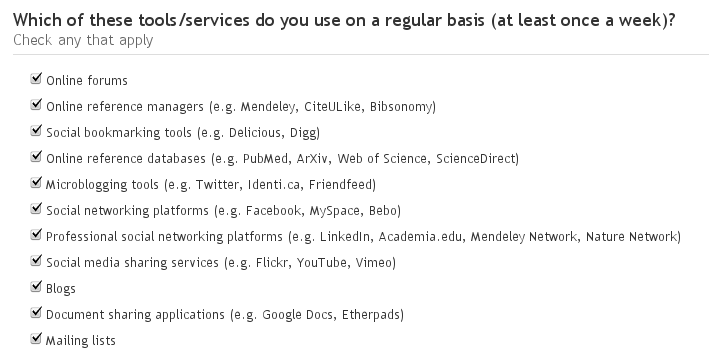
<p>As a nice spin-off if gives you a star rating for how well you are into the
social science networks:</p>

<p><img src="/blog/assets/images/showoff.png" alt="" /></p>

<p>I got eleven stars, but that should not surprise you.</p>]]></content><author><name>Egon Willighagen</name></author><category term="cb" /><category term="wikipedia" /><summary type="html"><![CDATA[Fulfilling a request by Daniel, following Antony’s title, and adding a random link to a Wikipedia molecule just to see it show up in Chemical blogspace now that I fixed the InChI detection, I hereby invite every scientist to fill out this questionnaire, surveying how scientists use and do not use Wikipedia to spread knowledge.]]></summary><media:thumbnail xmlns:media="http://search.yahoo.com/mrss/" url="http://egonw.github.io/blog/blog/assets/images/showoff.png" /><media:content medium="image" url="http://egonw.github.io/blog/blog/assets/images/showoff.png" xmlns:media="http://search.yahoo.com/mrss/" /></entry><entry><title type="html">Downloading Domoic Acid from PubChem</title><link href="http://egonw.github.io/blog/2009/04/17/downloading-domoic-acid-from-pubchem.html" rel="alternate" type="text/html" title="Downloading Domoic Acid from PubChem" /><published>2009-04-17T00:10:00+00:00</published><updated>2009-04-17T00:10:00+00:00</updated><id>http://egonw.github.io/blog/2009/04/17/downloading-domoic-acid-from-pubchem</id><content type="html" xml:base="http://egonw.github.io/blog/2009/04/17/downloading-domoic-acid-from-pubchem.html"><![CDATA[<p>The identity of <a href="http://en.wikipedia.org/wiki/Domoic_acid">domoic acid</a> has been under discussion (see
<a href="http://www.chemspider.com/blog/the-plot-thickens-on-domoic-acid.html">here</a>, <a href="http://www.chemspider.com/blog/where-does-ce-news-source-its-chemical-structures.html">here</a>
and <a href="http://www.chemspider.com/blog/providing-some-structured-support-with-chemspiders-wikipedia-services.html">here</a>).
(And I very much like the <a href="http://www.chemspider.com/">ChemSpider</a> service to make it easy to
<a href="http://www.chemspider.com/blog/providing-some-structured-support-with-chemspiders-wikipedia-services.html">copy data from ChemSpider into WikiPedia ChemBoxes</a>;
cheers!)</p>

<p>Now, my practical in next weeks <a href="https://apps.sourceforge.net/mediawiki/cdk/index.php?title=CDK_Workshop_2009">CDK Workshop will</a> use
<a href="http://groovy.codehaus.org/">Groovy</a> (please install it on your laptop!), and am hacking up example scripts for the course material,
and came up with this script to download the structure of <a href="http://pubchem.ncbi.nlm.nih.gov/summary/summary.cgi?cid=5282253">domoic acid</a>
from <a href="http://pubchem.ncbi.nlm.nih.gov/">PubChem</a> (CID:5282253):</p>

<script src="https://gist.github.com/97067.js"></script>]]></content><author><name>Egon Willighagen</name></author><category term="cdk" /><category term="pubchem" /><category term="chemspider" /><category term="wikipedia" /><category term="inchikey:VZFRNCSOCOPNDB-AOKDLOFSSA-N" /><summary type="html"><![CDATA[The identity of domoic acid has been under discussion (see here, here and here). (And I very much like the ChemSpider service to make it easy to copy data from ChemSpider into WikiPedia ChemBoxes; cheers!)]]></summary></entry><entry><title type="html">DBPedia: lookup and autocomplete of chemistry</title><link href="http://egonw.github.io/blog/2009/02/11/dbpedia-lookup-and-autocomplete-of.html" rel="alternate" type="text/html" title="DBPedia: lookup and autocomplete of chemistry" /><published>2009-02-11T00:00:00+00:00</published><updated>2009-02-11T00:00:00+00:00</updated><id>http://egonw.github.io/blog/2009/02/11/dbpedia-lookup-and-autocomplete-of</id><content type="html" xml:base="http://egonw.github.io/blog/2009/02/11/dbpedia-lookup-and-autocomplete-of.html"><![CDATA[<p>On the <a href="http://dbpedia.org/">DBPedia</a> <a href="https://lists.sourceforge.net/lists/listinfo/dbpedia-discussion">discussion mailing list</a> there was a post on a
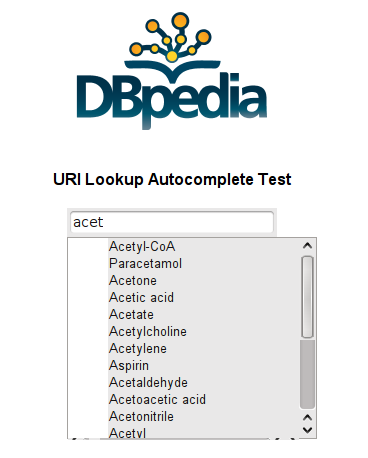
nice web page which allows you to look up things, and which features a autocomplete edit field. The below screenshot show lookup of molecular structures:</p>

<p><img src="/blog/assets/images/dbpediaAutocomplete.png" alt="" /></p>

<p>If you are not ware of this, adding content to DBPedia is as easy as adding something to <a href="http://www.wikipedia.org/">WikiPedia</a>. Literally: DBPedia is
the <a href="http://en.wikipedia.org/wiki/Resource_Description_Framework">RDF</a> flavour of WikiPedia. It extracts the information from the info boxes, as I
discussed before (see <a href="http://chem-bla-ics.blogspot.com/2007/08/molecules-in-wikipedia.html">Molecules in Wikipedia</a>).</p>

<p>BTW, one can take advantage of DBPedia to see what WikiPedia has to offer in terms of chemistry. For example, to list all molecules which have a SMILES, one can use this simple SPARQL query:</p>

<script src="http://gist.github.com/57559.js"></script>

<p>Or, to list those which have an InChI:</p>

<script src="https://gist.github.com/57571.js"></script>

<p>And this is actually quite useful, e.g. it can be used in quality control. Running the above queries will show up several broken SMILES and InChIs. I have not had time to fix those yet, so please go ahead and beat me to those fixes, and get some WikiPedia Fame :) Alternatively, invert the queries and add missing InChIs, PubChem CID or SMILES. When I have a bit more free time again, after the new stable CDK and Bioclipse releases, I’ll runs these analyses again, and summarize them in a web page.</p>]]></content><author><name>Egon Willighagen</name></author><category term="rdf" /><category term="dbpedia" /><category term="wikipedia" /><category term="smiles" /><category term="inchi" /><summary type="html"><![CDATA[On the DBPedia discussion mailing list there was a post on a nice web page which allows you to look up things, and which features a autocomplete edit field. The below screenshot show lookup of molecular structures:]]></summary><media:thumbnail xmlns:media="http://search.yahoo.com/mrss/" url="http://egonw.github.io/blog/blog/assets/images/dbpediaAutocomplete.png" /><media:content medium="image" url="http://egonw.github.io/blog/blog/assets/images/dbpediaAutocomplete.png" xmlns:media="http://search.yahoo.com/mrss/" /></entry><entry><title type="html">Molecules in Wikipedia without InChIs #3</title><link href="http://egonw.github.io/blog/2007/11/16/molecules-in-wikipedia-without-inchis-3.html" rel="alternate" type="text/html" title="Molecules in Wikipedia without InChIs #3" /><published>2007-11-16T00:00:00+00:00</published><updated>2007-11-16T00:00:00+00:00</updated><id>http://egonw.github.io/blog/2007/11/16/molecules-in-wikipedia-without-inchis-3</id><content type="html" xml:base="http://egonw.github.io/blog/2007/11/16/molecules-in-wikipedia-without-inchis-3.html"><![CDATA[<p>Third in the series of blogs about molecules in <a href="http://www.wikipedia.org/">Wikipedia</a> without an
<a href="http://www.iupac.org/inchi/">InChI</a> (see also <a href="http://chem-bla-ics.blogspot.com/2007/06/using-wikipedia-to-recognize-molecules.html">#1</a> and
<a href="http://chem-bla-ics.blogspot.com/2007/08/molecules-in-wikipedia-without-inchis.html">#2</a>).
There a certainly false positives, but here’s the updated list:</p>

<div class="language-plaintext highlighter-rouge"><div class="highlight"><pre class="highlight"><code>http://www.en.wikipedia.org/wiki/AZD2171
http://www.en.wikipedia.org/wiki/Alizarin
http://www.en.wikipedia.org/wiki/Allantoin
http://www.en.wikipedia.org/wiki/Allylamine
http://www.en.wikipedia.org/wiki/Alpha-ethyltryptamine
http://www.en.wikipedia.org/wiki/Anthraquinone
http://www.en.wikipedia.org/wiki/Aspartame
http://www.en.wikipedia.org/wiki/Barium_sulfate
http://www.en.wikipedia.org/wiki/Biotin
http://www.en.wikipedia.org/wiki/Boron_nitride
http://www.en.wikipedia.org/wiki/Botox
http://www.en.wikipedia.org/wiki/Bremelanotide
http://www.en.wikipedia.org/wiki/CAS_registry_number
http://www.en.wikipedia.org/wiki/Cadmium_sulfide
http://www.en.wikipedia.org/wiki/Carminic_acid
http://www.en.wikipedia.org/wiki/Celestine_%28mineral%29
http://www.en.wikipedia.org/wiki/Cellulose
http://www.en.wikipedia.org/wiki/Chemical
http://www.en.wikipedia.org/wiki/Chemical_file_format
http://www.en.wikipedia.org/wiki/Cheminformatics
http://www.en.wikipedia.org/wiki/Chloramine
http://www.en.wikipedia.org/wiki/Chloroethane
http://www.en.wikipedia.org/wiki/Cinnamic_acid
http://www.en.wikipedia.org/wiki/Crabtree's_catalyst
http://www.en.wikipedia.org/wiki/DDT
http://www.en.wikipedia.org/wiki/DMAP
http://www.en.wikipedia.org/wiki/Dimethicone#Applications
http://www.en.wikipedia.org/wiki/Dimethyl_amine
http://www.en.wikipedia.org/wiki/Dimethyl_sulfide
http://www.en.wikipedia.org/wiki/Dimethylethanolamine
http://www.en.wikipedia.org/wiki/Dioxine
http://www.en.wikipedia.org/wiki/Diphenylamine
http://www.en.wikipedia.org/wiki/Dmso
http://www.en.wikipedia.org/wiki/EDTA
http://www.en.wikipedia.org/wiki/Eschenmoser%27s_salt
http://www.en.wikipedia.org/wiki/Ethylene_carbonate
http://www.en.wikipedia.org/wiki/Folate
http://www.en.wikipedia.org/wiki/Formic_acid
http://www.en.wikipedia.org/wiki/HMPA
http://www.en.wikipedia.org/wiki/Hafnium(IV)_oxide
http://www.en.wikipedia.org/wiki/Heavy_water
http://www.en.wikipedia.org/wiki/Hexafluoroisopropanol
http://www.en.wikipedia.org/wiki/Hydrogen_cyanide
http://www.en.wikipedia.org/wiki/Hydrogen_cyanide#Hydrogen_cyanide_as_a_chemical_weapon
http://www.en.wikipedia.org/wiki/Hydrogen_peroxide
http://www.en.wikipedia.org/wiki/Hydroxyapatite
http://www.en.wikipedia.org/wiki/Hydroxybenzotriazole
http://www.en.wikipedia.org/wiki/IUPAC_nomenclature_of_inorganic_chemistry
http://www.en.wikipedia.org/wiki/Indole
http://www.en.wikipedia.org/wiki/Interferon_beta-1a
http://www.en.wikipedia.org/wiki/J%C3%B6ns_Jakob_Berzelius
http://www.en.wikipedia.org/wiki/Lawesson%27s_reagent
http://www.en.wikipedia.org/wiki/Lewisite
http://www.en.wikipedia.org/wiki/MTBE
http://www.en.wikipedia.org/wiki/Maitotoxin
http://www.en.wikipedia.org/wiki/Menthol
http://www.en.wikipedia.org/wiki/Merck_Index
http://www.en.wikipedia.org/wiki/Mescaline
http://www.en.wikipedia.org/wiki/Metaldehyde
http://www.en.wikipedia.org/wiki/Methionylalanylthreonyl...leucine
http://www.en.wikipedia.org/wiki/Methyl_amine
http://www.en.wikipedia.org/wiki/Methyl_salicylate
http://www.en.wikipedia.org/wiki/Molecular_Query_Language
http://www.en.wikipedia.org/wiki/N-butyllithium
http://www.en.wikipedia.org/wiki/Nafion
http://www.en.wikipedia.org/wiki/Nitrous_oxide
http://www.en.wikipedia.org/wiki/Octanitrocubane
http://www.en.wikipedia.org/wiki/Organic_chemistry
http://www.en.wikipedia.org/wiki/Organic_chemistry#Molecular_structure_elucidation
http://www.en.wikipedia.org/wiki/P4O10
http://www.en.wikipedia.org/wiki/Paraldehyde
http://www.en.wikipedia.org/wiki/Penicillin
http://www.en.wikipedia.org/wiki/Peroxyacetic_acid
http://www.en.wikipedia.org/wiki/Phenol
http://www.en.wikipedia.org/wiki/Physical_science
http://www.en.wikipedia.org/wiki/Piperidine
http://www.en.wikipedia.org/wiki/Potassium_chloride
http://www.en.wikipedia.org/wiki/Psilocybin
http://www.en.wikipedia.org/wiki/Pubchem
http://www.en.wikipedia.org/wiki/Quinine_total_synthesis
http://www.en.wikipedia.org/wiki/Resveratrol
http://www.en.wikipedia.org/wiki/Rhodamine
http://www.en.wikipedia.org/wiki/Salvia_divinorum
http://www.en.wikipedia.org/wiki/Selenium_dioxide
http://www.en.wikipedia.org/wiki/Silicon_carbide
http://www.en.wikipedia.org/wiki/Skatole
http://www.en.wikipedia.org/wiki/Skeletal_formula
http://www.en.wikipedia.org/wiki/Soman
http://www.en.wikipedia.org/wiki/Splenda
http://www.en.wikipedia.org/wiki/Standard_atomic_weight
http://www.en.wikipedia.org/wiki/Subgraph_isomorphism_problem
http://www.en.wikipedia.org/wiki/Sulfur_hexafluoride
http://www.en.wikipedia.org/wiki/Sulfur_mustard
http://www.en.wikipedia.org/wiki/TBHQ
http://www.en.wikipedia.org/wiki/Tabun_(nerve_agent)
http://www.en.wikipedia.org/wiki/Teicoplanin
http://www.en.wikipedia.org/wiki/Tetra-ethyl_lead
http://www.en.wikipedia.org/wiki/Tetraazidomethane
http://www.en.wikipedia.org/wiki/Tetrachloroethylene
http://www.en.wikipedia.org/wiki/Thiomersal
http://www.en.wikipedia.org/wiki/Titanium_dioxide
http://www.en.wikipedia.org/wiki/Tourmaline
http://www.en.wikipedia.org/wiki/Uric_acid
http://www.en.wikipedia.org/wiki/VX_%28nerve_agent%29
http://www.en.wikipedia.org/wiki/Valence_%28chemistry%29
http://www.en.wikipedia.org/wiki/benzylbromide
http://www.en.wikipedia.org/wiki/cortisone
http://www.en.wikipedia.org/wiki/epothilone
http://www.en.wikipedia.org/wiki/piperidine
http://www.en.wikipedia.org/wiki/stilbene
http://www.wikipedia.org/wiki/Phosgene
</code></pre></div></div>]]></content><author><name>Egon Willighagen</name></author><category term="wikipedia" /><category term="inchi" /><summary type="html"><![CDATA[Third in the series of blogs about molecules in Wikipedia without an InChI (see also #1 and #2). There a certainly false positives, but here’s the updated list:]]></summary></entry><entry><title type="html">Molecules in Wikipedia without InChIs</title><link href="http://egonw.github.io/blog/2007/08/11/molecules-in-wikipedia-without-inchis.html" rel="alternate" type="text/html" title="Molecules in Wikipedia without InChIs" /><published>2007-08-11T00:00:00+00:00</published><updated>2007-08-11T00:00:00+00:00</updated><id>http://egonw.github.io/blog/2007/08/11/molecules-in-wikipedia-without-inchis</id><content type="html" xml:base="http://egonw.github.io/blog/2007/08/11/molecules-in-wikipedia-without-inchis.html"><![CDATA[<p>I reported last week about the <a href="https://chem-bla-ics.linkedchemistry.info/2007/08/02/molecules-in-wikipedia.html">Molecules in Wikipedia <i class="fa-solid fa-recycle fa-xs"></i></a>
and the plethora of templates used. <a href="http://cb.openmolecules.net/">Chemical blogspace</a> has also been using
<a href="http://en.wikipedia.org/">Wikipedia</a> URLs as molecular identifier and extracting InChIs from the wiki pages (see
<a href="https://chem-bla-ics.linkedchemistry.info/2007/06/19/using-wikipedia-to-recognize-molecules.html">Using Wikipedia to recognize Molecules in Blogspace <i class="fa-solid fa-recycle fa-xs"></i></a>).
Several people have shown interest in adding InChIs for molecules in Wikipedia, so here’s a new version of a
list it molecules without InChIs:</p>

<div class="language-plaintext highlighter-rouge"><div class="highlight"><pre class="highlight"><code>http://www.en.wikipedia.org/wiki/Hydrogen_cyanide#Hydrogen_cyanide_as_a_chemical_weapon -&gt; but no InChI/CID
http://www.en.wikipedia.org/wiki/P-Phenylenediamine -&gt; but no InChI/CID
http://www.en.wikipedia.org/wiki/Valence_%28chemistry%29 -&gt; but no InChI/CID
http://www.en.wikipedia.org/wiki/Nitrous_oxide -&gt; but no InChI/CID
http://www.en.wikipedia.org/wiki/Cytisine -&gt; but no InChI/CID
http://www.en.wikipedia.org/wiki/Disulfur_decafluoride -&gt; but no InChI/CID
http://www.en.wikipedia.org/wiki/Mescaline -&gt; but no InChI/CID
http://www.en.wikipedia.org/wiki/Lewisite -&gt; but no InChI/CID
http://www.en.wikipedia.org/wiki/Sulfur_mustard -&gt; but no InChI/CID
http://www.en.wikipedia.org/wiki/Tryptamine -&gt; but no InChI/CID
http://www.en.wikipedia.org/wiki/Interferon_beta-1a -&gt; but no InChI/CID
http://www.en.wikipedia.org/wiki/Methyl_isocyanate -&gt; but no InChI/CID
http://www.en.wikipedia.org/wiki/Anthraquinone -&gt; but no InChI/CID
http://www.en.wikipedia.org/wiki/Tocopherol -&gt; but no InChI/CID
http://www.en.wikipedia.org/wiki/Cinnamic_acid -&gt; but no InChI/CID
http://www.en.wikipedia.org/wiki/Tryptamine -&gt; but no InChI/CID
http://www.en.wikipedia.org/wiki/Psilocybin -&gt; but no InChI/CID
http://www.en.wikipedia.org/wiki/Alphamethyltryptamine -&gt; but no InChI/CID
http://www.en.wikipedia.org/wiki/Alpha-ethyltryptamine -&gt; but no InChI/CID
http://www.en.wikipedia.org/wiki/Allylamine -&gt; but no InChI/CID
http://www.en.wikipedia.org/wiki/Ergosterol -&gt; but no InChI/CID
http://www.en.wikipedia.org/wiki/Squalene -&gt; but no InChI/CID
http://www.en.wikipedia.org/wiki/Sulfur_hexafluoride -&gt; but no InChI/CID
</code></pre></div></div>

<p>Strictly speaking, the list should be longer, as the code that produced this list actually is also happy
when a PubChem compound identifier (CID) is given. The previous list is also
<a href="https://chem-bla-ics.linkedchemistry.info/2007/06/19/using-wikipedia-to-recognize-molecules.html">still online <i class="fa-solid fa-recycle fa-xs"></i></a>.</p>]]></content><author><name>Egon Willighagen</name></author><category term="wikipedia" /><category term="inchi" /><summary type="html"><![CDATA[I reported last week about the Molecules in Wikipedia and the plethora of templates used. Chemical blogspace has also been using Wikipedia URLs as molecular identifier and extracting InChIs from the wiki pages (see Using Wikipedia to recognize Molecules in Blogspace ). Several people have shown interest in adding InChIs for molecules in Wikipedia, so here’s a new version of a list it molecules without InChIs:]]></summary></entry><entry><title type="html">Molecules in Wikipedia</title><link href="http://egonw.github.io/blog/2007/08/02/molecules-in-wikipedia.html" rel="alternate" type="text/html" title="Molecules in Wikipedia" /><published>2007-08-02T00:00:00+00:00</published><updated>2007-08-02T00:00:00+00:00</updated><id>http://egonw.github.io/blog/2007/08/02/molecules-in-wikipedia</id><content type="html" xml:base="http://egonw.github.io/blog/2007/08/02/molecules-in-wikipedia.html"><![CDATA[<p>I do not care about physical and chemical properties in <a href="http://wikipedia.org/">Wikipedia</a>, as I can easily extract them from other sources.
The main value of Wikipedia for molecules is, I think, that it describes the history of a molecule. Additionally, the Wikipedia URL is a
nice unique molecular identifier (for example <em><a href="http://en.wikipedia.org/wiki/Lactose">http://en.wikipedia.org/wiki/Lactose</a></em>) given certain
conditions, and many <a href="https://chem-bla-ics.linkedchemistry.info/2007/06/19/using-wikipedia-to-recognize-molecules.html">bloggers are using it as such <i class="fa-solid fa-recycle fa-xs"></i></a>.
But, it only is a useful identifier if one (and only one) InChI is stated on the wiki page.</p>

<p>Now that I am <a href="http://chem-bla-ics.blogspot.com/2007/07/rdf-ing-molecular-space.html">RDF-ing molecular space</a>, I was
<a href="http://del.icio.us/url/e24b896a3398220b76d47f59dbdc2634">again</a> interested in <a href="http://dbpedia.org/docs/">dbpedia</a>, a RDF version of Wikipedia.
See these two <a href="https://chem-bla-ics.linkedchemistry.info/2007/06/19/quality-of-chemical-database.html">blog <i class="fa-solid fa-recycle fa-xs"></i></a>
<a href="http://radar.oreilly.com/archives/2007/03/different_appro_1.html">items</a> and Peter’s very nice
<a href="http://wwmm.ch.cam.ac.uk/blogs/murrayrust/?p=333">dbpedia, RDF and SPARQL - for chemistry</a> item.
<a href="http://www.scs.carleton.ca/~cleger">Christian</a> is picking this up, and extending dbpedia for support for the various chemical boxes.</p>

<h2 id="wikipedia-templates">Wikipedia Templates</h2>

<p>I have spotted a couple of templates: <a href="http://en.wikipedia.org/w/index.php?title=Template:Drugbox">Drugbox</a>,
<a href="http://en.wikipedia.org/w/index.php?title=Template:Chembox">Chembox</a>, <a href="http://en.wikipedia.org/w/index.php?title=Template:Chembox_new">Chembox new</a>,
of which the last one seems to most recent, and has extensions for explosives and drugs. The
<a href="http://en.wikipedia.org/wiki/Wikipedia:WikiProject_Chemicals">WikiProject Chemicals</a> does not mention it though. Anyone who knows the status?
Is <em>chembox new</em> the way forward and going to replace the older <em>chembox</em>? I hope so, because only the newer one has InChI in
the last of official fields. Or is <em>chembox new</em> simply an extension of <em>chembox</em> itself?</p>

<p>Somewhere between 1000 and 1500 entries use the <em>chembox new</em> and another 1000 to 1500 use <em>chembox</em> but I assume there is
considerable overlap. Additionally, Christian noted that there still seem to be molecules in Wikipedia which do not use a
template at all, and counted some 1900 molecules using various lists. If you you want to keep a more close eye on chemistry in
dbpedia, you should register to the <a href="http://sourceforge.net/mailarchive/forum.php?forum_name=dbpedia-discussion">dbpedia-discussion</a>
mailing list.</p>]]></content><author><name>Egon Willighagen</name></author><category term="chemistry" /><category term="wikipedia" /><category term="rdf" /><category term="inchi" /><summary type="html"><![CDATA[I do not care about physical and chemical properties in Wikipedia, as I can easily extract them from other sources. The main value of Wikipedia for molecules is, I think, that it describes the history of a molecule. Additionally, the Wikipedia URL is a nice unique molecular identifier (for example http://en.wikipedia.org/wiki/Lactose) given certain conditions, and many bloggers are using it as such . But, it only is a useful identifier if one (and only one) InChI is stated on the wiki page.]]></summary></entry></feed>